
He turned our breakup into a war. This is how I walked out alive with my truth intact.
For every woman who has been rewritten, doubted, or studied through a story she did not author.
I. The Camera in the Corner
There are moments in a woman’s life when she realises, she is no longer living freely — she is living observed.
Not always by a real eye, but by a story.
A distorted lens she did not choose, did not earn, did not deserve.
Survivors know this sensation well.
It is like standing in a room with a small camera perched high in the corner, its black eye fixed on you, unblinking. You feel it even when you cannot see it. You feel it when you breathe too loudly, when you pause too long before answering a question, when you raise your hand to your hair in a way that might be misinterpreted.
A smear campaign is that camera.
It is the quiet hum of being watched through a false version of yourself.
It is knowing someone has created an “official record” that you cannot escape.
It is existing under surveillance — psychological, social, professional.
And in this season marked by the White Ribbon campaign, which calls for an end to men’s violence against women, I want to speak about a form of violence that leaves no bruises but destroys everything it touches:
The violence of being rewritten.
II. When My Truth Became Dangerous
People assume the smear began when the relationship ended.
But that wasn’t the trigger.
My smear campaign began the moment I said no.
No to control.
No to manipulation.
No to obedience.
No to silence.
Abusers do not smear women they have broken,
they smear women who refuse to break.
It did not matter that I had remained patient for too long.
It did not matter that I had forgiven things no woman should ever have to forgive.
It did not matter that I had tried to keep the peace for the sake of the children.
What mattered to him was this simple truth:
I reclaimed my voice.
And he needed to destroy it.
Smears are not born from pain.
They are born from power.
From the fear of losing control over a narrative that once kept a woman small.
III. The Day My Life Became a File
My smear campaign did not begin with shouting.
It began with documentation.
A 34-page document.
Cold. Clinical. Calculated.
Not sent to me — I was not meant to be the first to read the story of my own life.
The intended audience was everyone else:
My family.
My friends.
My colleagues.
My children’s teachers.
My managers.
Even people who barely knew me.
Each page meticulously crafted to discredit me.
Private conversations were twisted into confessions.
Moments of vulnerability were reframed as instability.
Normal human emotions were inflated into pathology.
Lies were woven in so seamlessly that someone unfamiliar with abuse would struggle to unravel them.
He wrote of my “irrational behaviour” with the voice of a concerned husband.
He wrote of my “dangerous emotional state” with the posture of a guardian.
He wrote of my “unfaithfulness”, my “violence”, my “mental instability”, with the authority of someone presenting evidence in a courtroom.
He even attached recordings - some edited, some selective, some baited - and messages spliced out of context to manufacture the illusion of chaos.
And when that wasn’t enough, he installed an app on my phone and on my children’s tablets to watch us. Monitor us. Study us. Feed the narrative he was creating.
When the Crown Court later documented this behaviour publicly, I felt a strange combination of vindication and nausea. Yes, they finally saw it - but I had survived it alone.
What broke me wasn’t just the document.
It was the way it travelled.
Friends received it.
Family received it.
Colleagues received it.
Teachers heard whispers.
Professionals were shown pieces of me that had been twisted into weapons.
And suddenly I was everywhere, yet nowhere,
present in people’s minds,
but absent from my own story.
IV. The Silence After the Explosion
The cruelty of a smear campaign is not the moment of impact.
It’s the silence that follows.
The way friends fall quiet when you enter the room.
The way family members become cautious, as if your emotions might shatter at their feet.
The way colleagues glance at you with sympathy and suspicion tangled together.
Women who have lived this know that silence.
The suffocating hush of being treated as fragile and dangerous at once.
I became hyper-aware of myself:
My tone.
My posture.
The way my breath caught before I spoke.
The way my eyes moved in meetings.
The way I held my hands when speaking to professionals.
Everything felt like evidence.
I learned to rehearse my expressions in the mirror.
I learned to answer questions slowly, carefully, deliberately, the way a person under investigation speaks.
I learned to carry my pain in my shoulders and smile with my mouth but not my eyes.
I parented through humiliation.
I went to work while my reputation burned around me.
I cooked meals with shaking hands, answered school calls while swallowing tears, and slept with my phone under my pillow in case another message landed.
There is something uniquely brutal about living a normal life while simultaneously defending your sanity.
To the women who know this feeling:
You were not imagining it.
You were surviving it.
V. Courtrooms: Where Truth and Trauma Collide
Walking into court does not feel like seeking justice.
It feels like stepping into a theatre where you must perform your own credibility.
Every survivor knows the choreography:
Sit straight.
Speak calmly.
Do not cry.
Do not raise your voice.
Do not look emotional — they might call it instability.
Do not look detached — they might call it coldness.
Do not show anger — they might call it aggression.
Do not show fear — they might call it paranoia.
Women learn to contort themselves into palatable versions of truth-tellers.
And still, I had to read his lies in official documents.
I had to answer questions shaped by his narrative.
I had to remain composed while every part of me wanted to scream:
This is not who I am.
This is not my story.
This is not my truth.
But I did scream — silently, inside myself — and then I spoke calmly, clearly, with a strength I didn’t know I possessed.
And the truth began to show.
The judge saw it.
The no-contact order.
The court issued - two-year non-molestation order.
And later,
the eight-month prison sentence.
The ten-year restraining order.
A decade.
The Judge named it for what it was:
“A war.
And you and the children were the casualties.”
When the court finally held him accountable, I realised something no one tells survivors:
Winning doesn’t feel like victory.
It feels like collapse.
It feels like exhaling after years of holding your breath underwater.
VI. Aftermath: The Ghosts a Smear Leaves Behind
People believe that once the courts recognise the abuse, the story ends.
But the story doesn’t end there.
The smear outlives the abuser.
It lingers in old conversations, unanswered questions, in the way people hesitate before trusting you again.
It lives in the professional files written about you during the chaos.
It remains in the digital world. screenshots, forwarded messages, deleted accounts, fragments floating forever.
The smear becomes a ghost that haunts your reputation long after the abuser disappears.
And yet —
survivors rebuild.
Not instantly.
Not cleanly.
Not magically.
But slowly.
Deliberately.
You pick up pieces of yourself and examine them gently:
Who was I before?
Who am I now?
What parts of me survived?
What parts must be born again?
Surviving a smear campaign means rebuilding your identity with your own hands,
after someone else tried to dismantle it.
It is one of the hardest forms of healing.
But also one of the most profound.
VII. When Professionals Weaponise Trauma
Years later, I faced something I never expected:
The echo of the smear — not from him, but from institutions.
Schools.
Safeguarding teams.
Authorities.
Support organisations.
Not overtly malicious,
but subtly dismissive.
Suddenly, my trauma was not evidence of harm.
It was “perception.”
It was “sensitivity.”
It was “heightened emotion.”
It was “a misinterpretation of events.”
Professionals used phrases like:
“Perhaps the trauma is colouring your understanding.”
“We need to separate facts from your emotional experience.”
“Maybe your anxiety is influencing your interpretation.”
And I realised:
The most dangerous place for a survivor is not always the hands of the abuser,
but the hands of professionals who mistake trauma for confusion.
Trauma does not make you misread danger.
Trauma makes you recognise danger before others can see it.
Trauma is not a distortion.
Trauma is a memory,
written into the nervous system
in a language the body does not forget.
When institutions treat trauma as unreliability,
they do not remain neutral:
They replicate the abuser’s strategy.
They invalidate.
They minimise.
They silence.
And this — THIS — is why survivors must keep speaking.
Even when our voices shake.
Especially when our voices shake.
VIII. Resilience: The Quiet Rebellion
I did not survive a smear campaign by fighting louder.
I survived by standing in my truth long enough for the lies to decay.
I survived by refusing to let someone else define me.
By holding my head up in rooms where I was expected to break.
By continuing to show up for my children.
By telling the truth repeatedly, until truth recognised itself in me.
Resilience is not loud.
It is not dramatic.
It is not a victory march.
Resilience is quiet.
Steady.
Unshakeable.
It is what happens when a woman walks through hell and comes out carrying her own name in her hands, unburned.
If you are reading this and you are in the middle of a smear.
or still healing from one,
let me tell you what no one told me:
You are not who they say you are.
You are not the whispers.
You are not the rumours.
You are not the file someone else created about you.
You are the one who survived.
You are the witness to your own truth.
And the truth - your truth - is stronger than any campaign designed to erase it.
Stand in it.
Even if you stand alone.
Even if your voice trembles.
Even if they call it trauma.
Especially when they call it trauma.
Because trauma is not your weakness.
Trauma is the proof you lived.
Trauma is the evidence.
Trauma is the truth the smear could not kill.
And so are you. 🖤
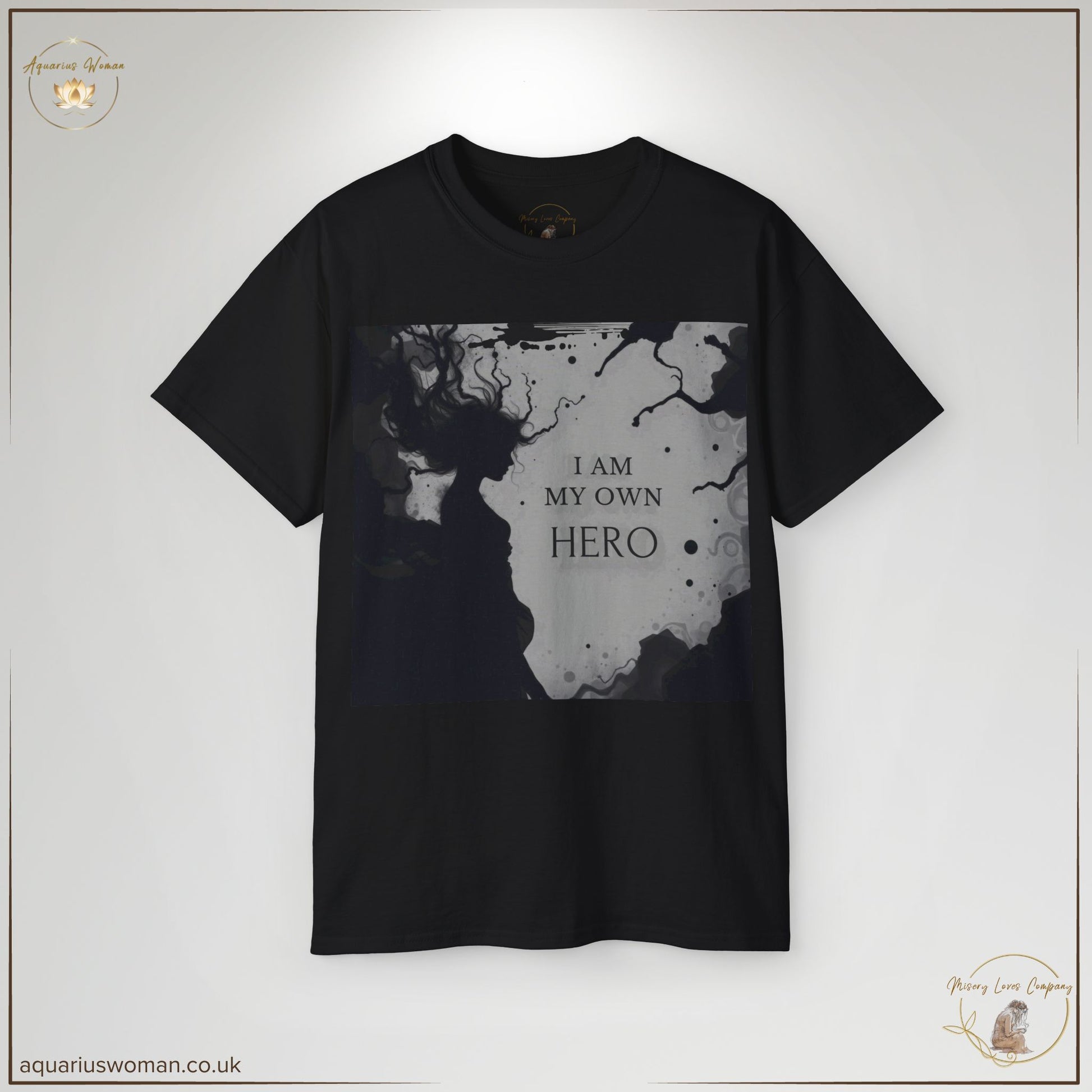
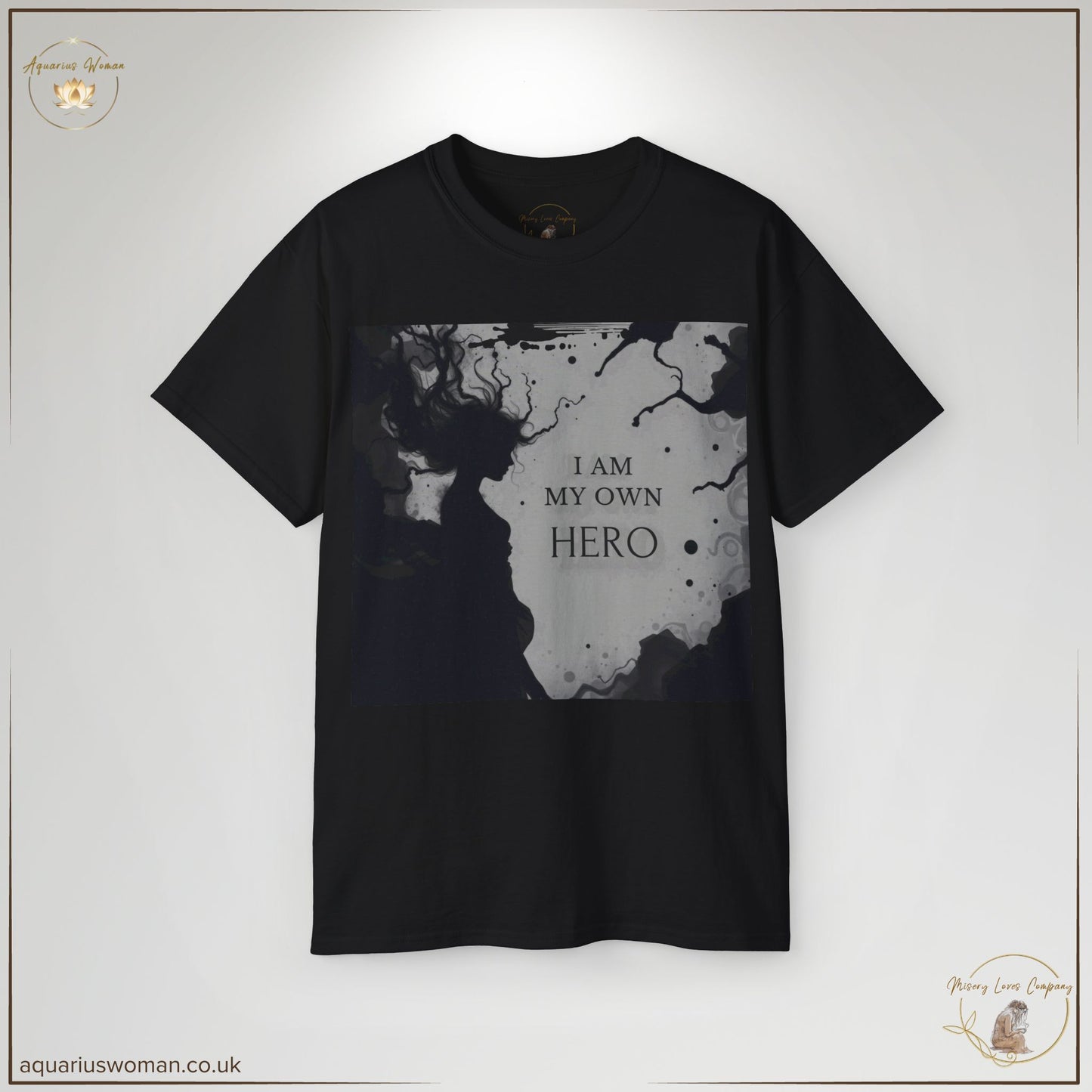
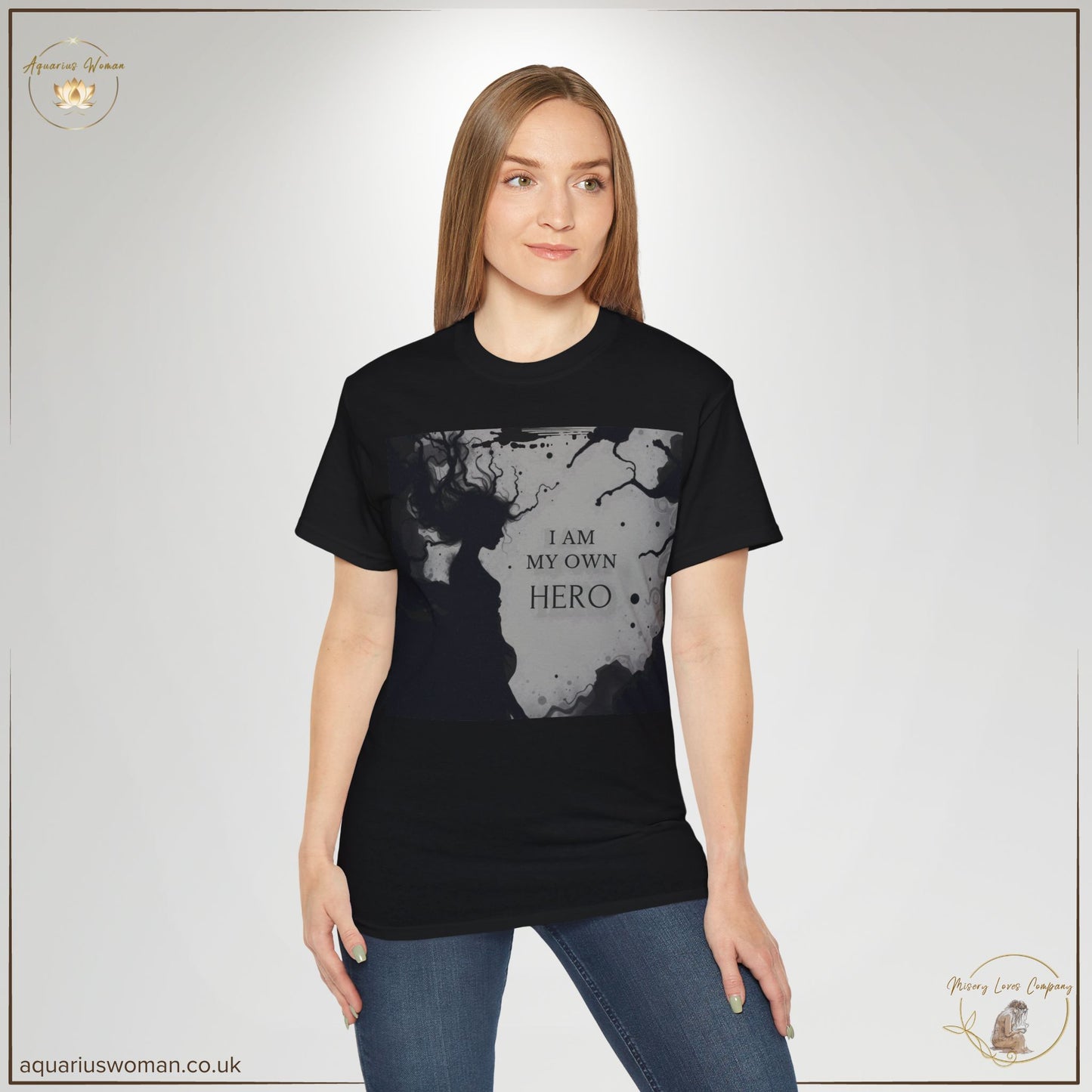
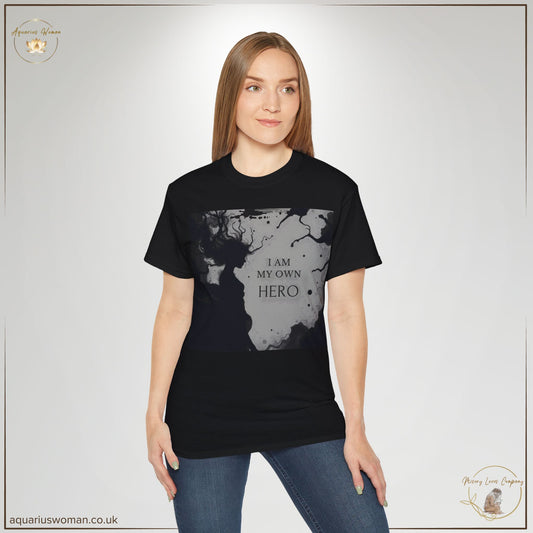
I Am My Own Hero
Every Aquarius Woman piece carries a meaning, not just a design.
The I Am My Own Hero tee sits under this story as a quiet declaration: after everything that was done to rewrite me, I chose to stand back up and write myself. It’s a reminder to me – and to anyone who wears it – that even when the world doubts you, you are allowed to be your own hero.